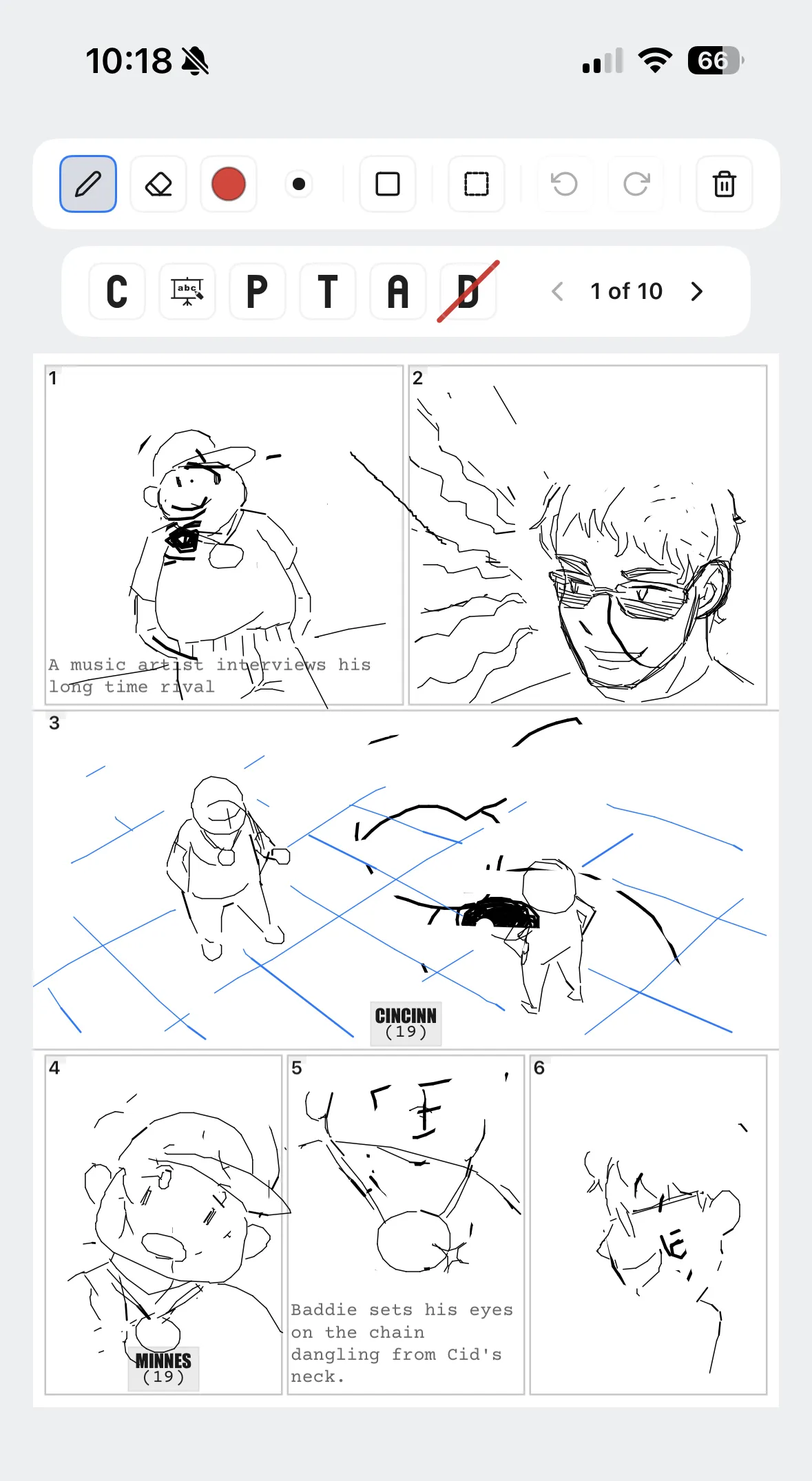
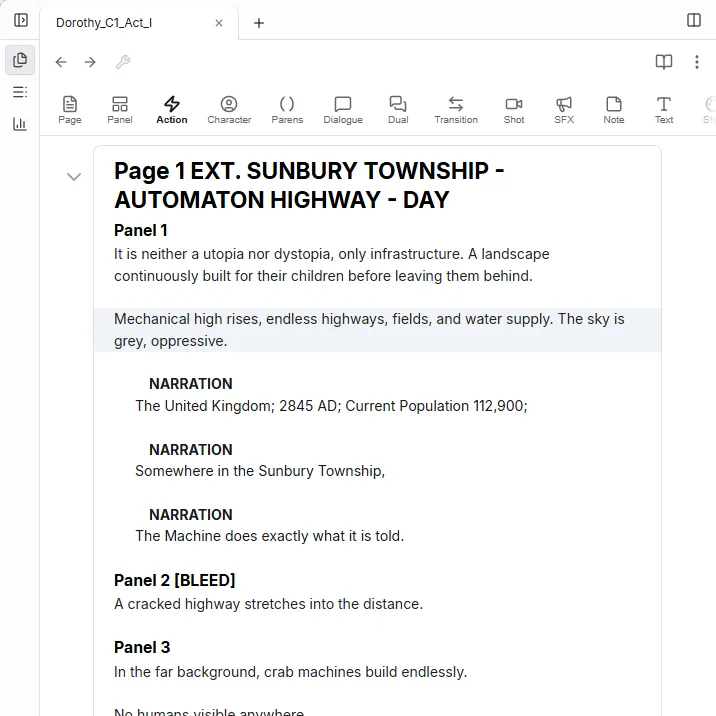
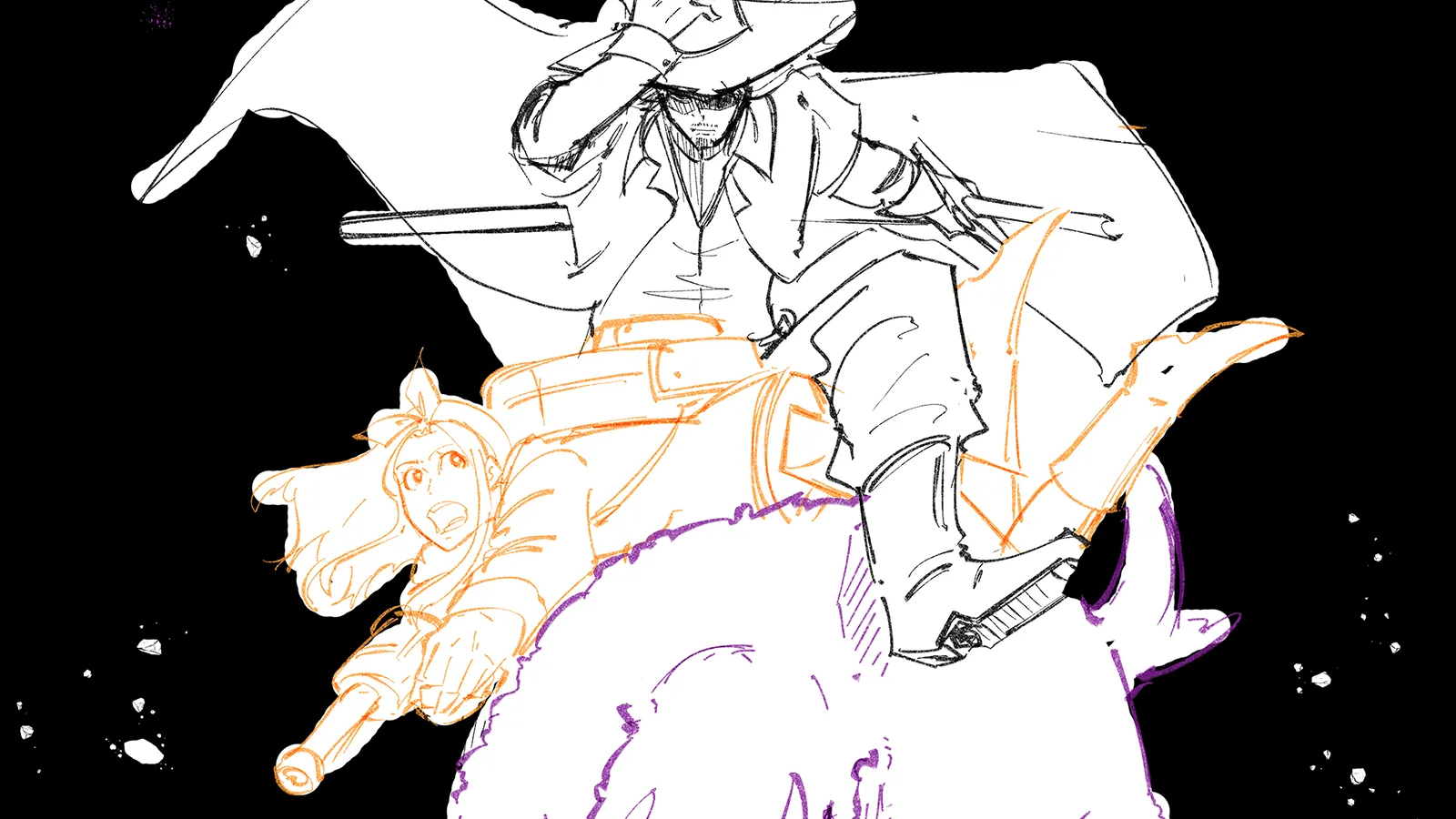
What does a Comic script look like?
Wonder no more, a real comic script is used side-by-side the production art to show how to write a comic script or graphic novel.
A drop-in Google Docs comic script example, laid out in full-script format with pages, panels, action lines and dialogue ready to edit.
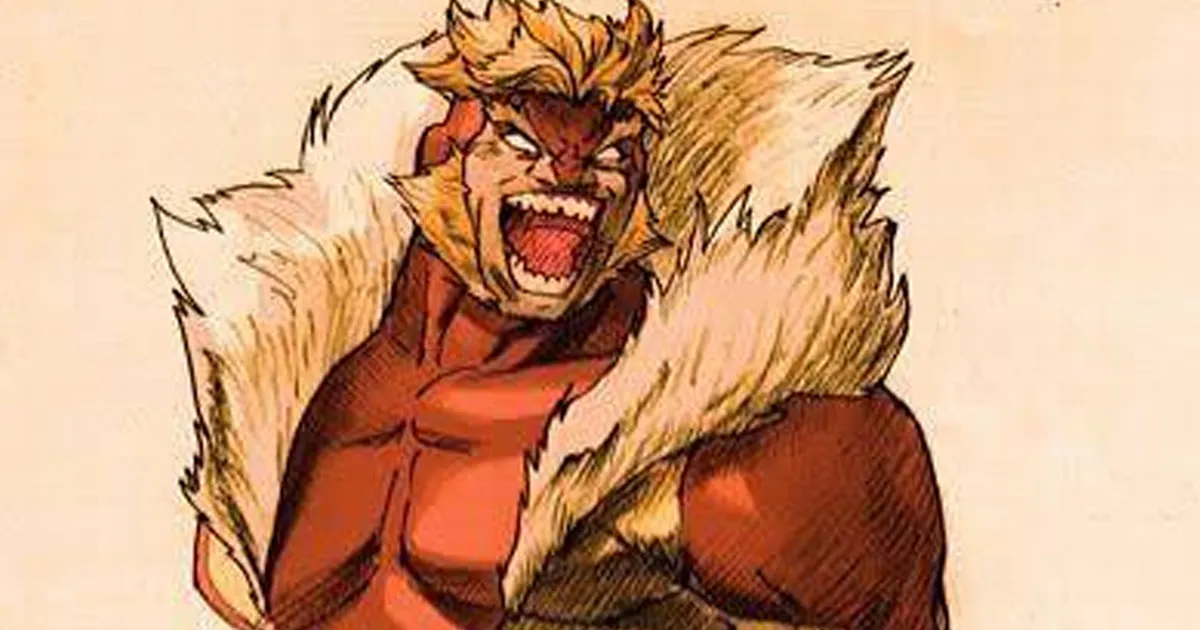
Here, click the link and copy the doc.
In this scene, Logan tracks a long-hidden foe to a fortress on the island of Krakoa. But to what end? Four panels, one page, no wasted words - that is what I want you to steal from.
# Page 1 EXT. OLD KRAKOA FORTRESS

Panel 1
A dust storm strangles its way down sand dunes in the distance. It thrashes against an Iron Fortress.

Panel 2
A MASKED MAN in withered cloth, stands at the footsteps of the fortress, his teeth grit the air.

Panel 3
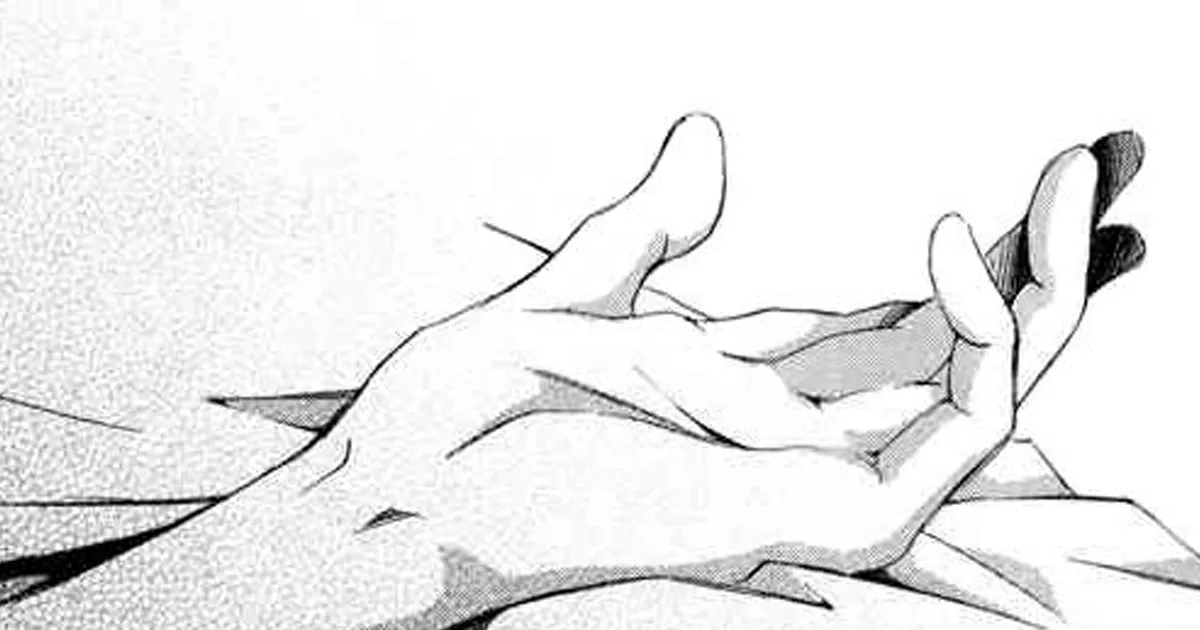
Metallic claws slice hinges clean off the fortress doors.

Panel 4
The door falls.
Before you copy anything, it helps to know there are two kinds of comic script examples floating around, and they read very differently.
A plot script is a loose synopsis.
The writer hands over a page or two of "here's roughly what happens" and lets the artist break it into panels.
Dialogue gets added later, over the finished art. This is the old Marvel Method - Stan Lee's writers gave the artist a paragraph and trusted them to pace it. It is fast and freeing, but it only works when the two of you already know each other's rhythm.
A full script is the opposite. Every panel is spelled out - what's in it, who speaks, how many beats the page holds - the way a screenplay spells out every scene.
The example above is a full script comic page, and that is deliberate. If you are writing solo, or working with someone for the first time, full script is the safer bet: they can always loosen a tight page, but they can't tighten a vague one. It also travels better - a full script reads the same to a letterer, an editor, or a translator who never spoke to you.
So when you read a comic script example online and it looks nothing like the last one you saw, this is usually why.
Neither is "correct" - they are just different contracts between writer and artist. Pick the one that matches how much you trust the person drawing it. When in doubt, the comic script format you want to learn first is the full one, because everything else is a shortcut off it.
I chose Logan for this example on purpose. When you already know who a character is, I don't have to burn a panel introducing him - I can spend the whole page on movement and threat instead. That is the trick with any opening: get the story moving with as few moving parts as possible.
Notice what the four panels do.
Panel 1 is a wide establishing beat - weather and a fortress, no people.
Panel 2 puts a figure in frame without naming him.
Panel 3 is a single violent action.
Panel 4 is the consequence, four words long.
No thought bubbles, no backstory, nothing the reader can't see. That restraint is the whole lesson:
a panel is a frozen second, and prose that can't be drawn is prose the artist can't use.
The Google Doc above lands in your Drive as a fresh copy - no account, no extension, no install. Inside is exactly the scene you just read, already formatted with a # Page header, four numbered panels, and action lines ready to overwrite. It is a Google Docs comic script you can start editing the second it opens.
Delete Logan, keep the shape. Swap in your own character and location, and you have a working first page in the time it takes to type it. The document does the formatting so you can spend your attention on the story.
Copying the doc is step one; the point is to see why each line earns its place, so you can write a comic that reads this cleanly without me.
# Page line names the location and time of day once, so you never repeat it panel to panel.Those four habits are the whole difference between a script someone can draw from and a paragraph they have to interpret.
A good comic script example isn't a rulebook, it's a starting shape. This one shows you full-script format, a clean four-panel page, and the discipline of writing only what the reader can see.
Open it in Google Docs, keep the bones, and pour your own story in. That beats staring at a blank page trying to remember which line gets indented - and it is a faster way to write a comic than any blank template.
I present to you Mangaplay Studio, for Desktop, Mobile and Google Docs. It's freemium with no signups or silly export limits. If you find value in it, then check out what the Pro Upgrade gives you!
Me, Pistol Taeja, put some respekt on my name!
I am an independent creator, I want to make art and show it to you like a proud child to a parent.
There's a whole ass About Page here. Read my manga perhaps too?
Wonder no more, a real comic script is used side-by-side the production art to show how to write a comic script or graphic novel.
A free comic script template for Google Docs - pages, panels, dialogue, and a ready-to-go Mangaplay/Fountain++ sample. Open, copy, start writing.

A character's first appearance sets everything that follows. How to introduce a character in a comic or manga so readers care from page one.