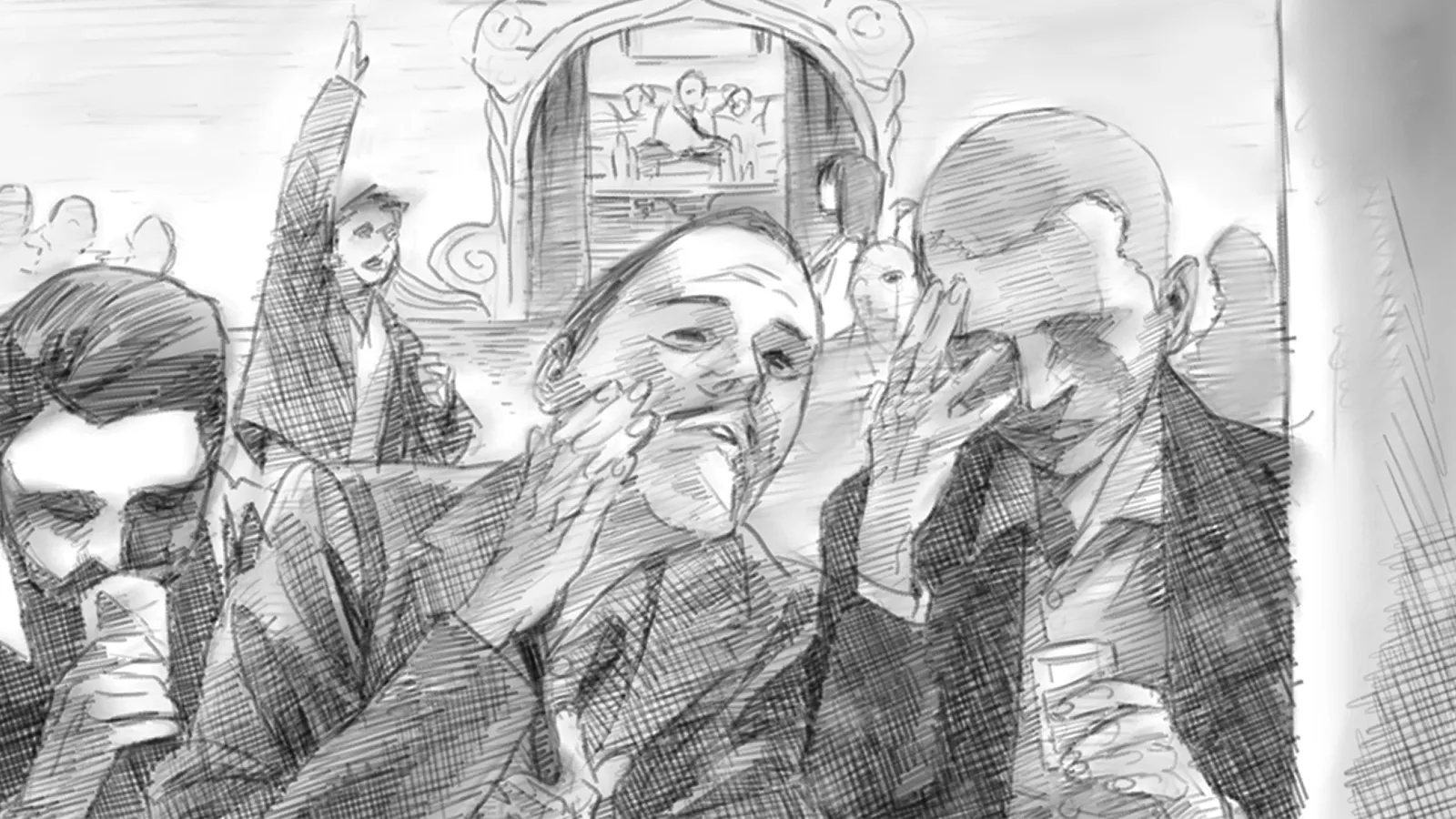
How to make a Manga and find an artist
A beginner-friendly walkthrough of writing a manga in plain text, using the script Barnicus made in real time by Pistol Taeja.
A character's first appearance sets everything that follows. How to introduce a character in a comic or manga so readers care from page one.
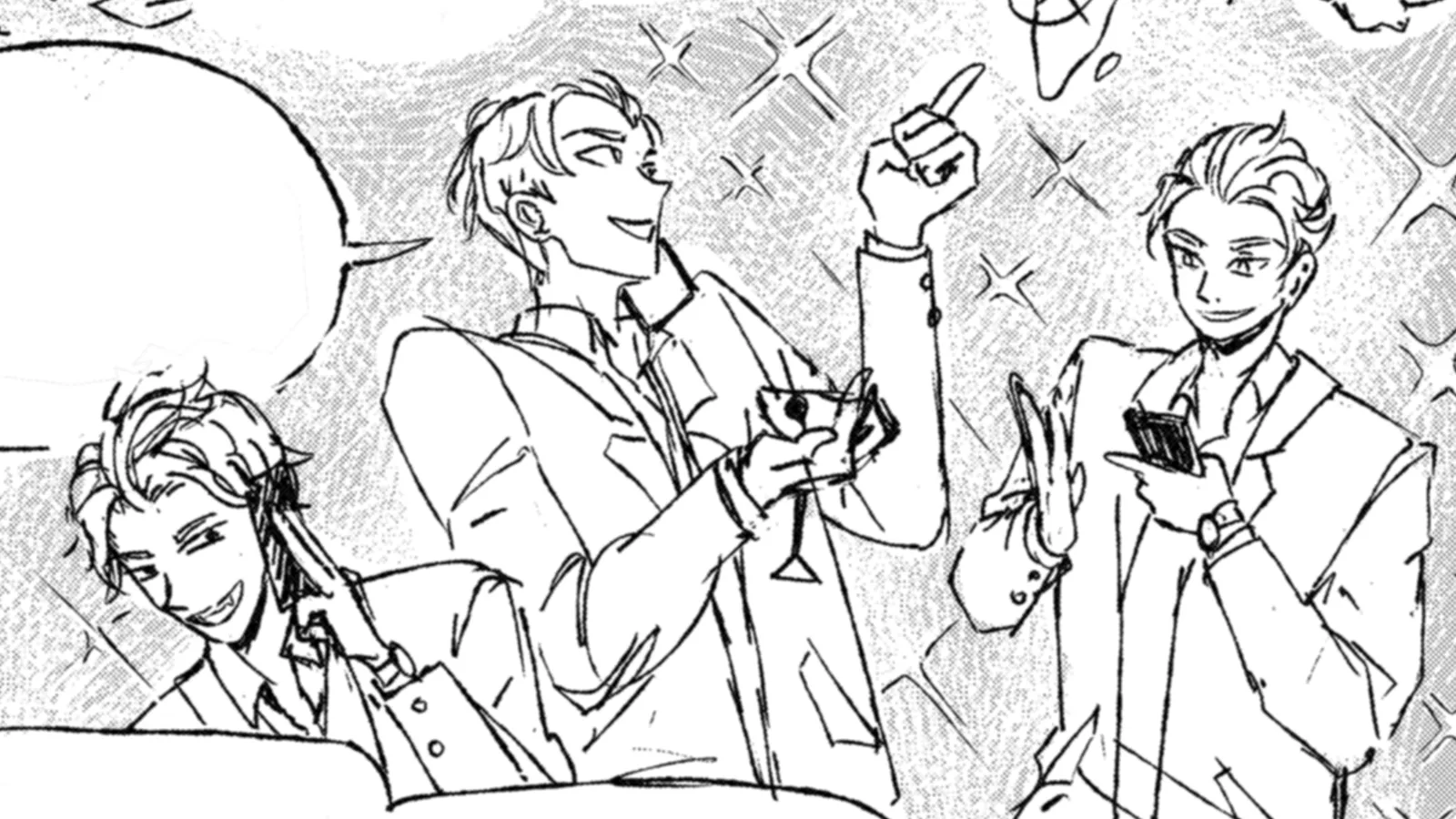
Howdy, my name is Pistol Taeja. I'm a manga writer, the creator of Mangaplay Studio, and the person who will be throwing words at you with examples to illustrate how to introduce a character in a comic or manga.
The best way to introduce a comic character is to show them mid-action, not mid-thought — and how to introduce a character in a script boils down to that same rule.
Readers meet Barnicus with his feet on the table and a tooth-pick between his teeth — the tableau tells you he owns the room before he says a single word, and that's the point.
The details do the work: crocodile-skin shoes on the furniture, sunk into a booth three sizes too big, yelling into a cellphone while other men keep their heads low around him.
He's the loudest thing in a room full of people trying not to be noticed, and the reader clocks that dynamic instantly. Wolverine's first appearance did the same trick — claws out, snarling, mid-attack — because comic writers learned early that action doesn't need a translator.
# Page 1 INT. SOMEWHERE DARK - NIGHT

Panel 1 [H]
Dark purple lights soak the leather interior of a private booth. The area is sparsely packed with men — heads low, eyes averted. GLITTER sparkles, out of focus.

Panel 2
CROCODILE SKIN SHOES slam on a table. The motion rattles empty bottles of soju.

Panel 3
BARNICUS — sunk deep into a couch three sizes too big, lanky legs on the table — picks his teeth with a tooth pick - yelling into a cellphone.

    BARNICUS
    I know we sell soju, but walk with me...

Panel 4

    HUSKY (O.S.)
    Just stop! We are now wealthy legally.

    HUSKY (O.S.)
    Quit it with these get-rich scams. I'm on my way to you right now.

Panel 5
Barnicus stares at the phone lost as if it's chewed his hairline.
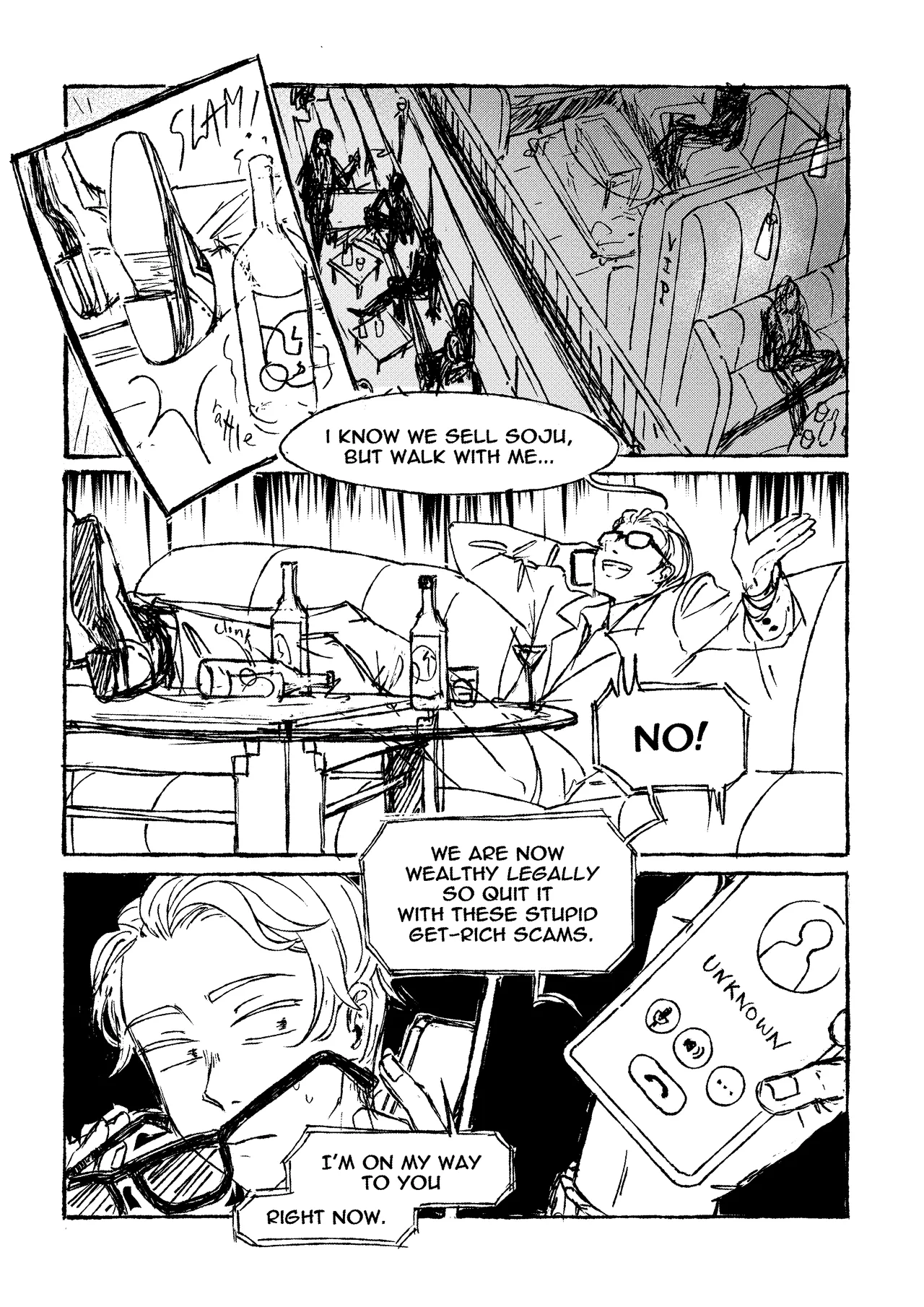
Every introduction in a comic script deserves one line the reader will quote back at their friend. Barnicus gets his in Panel 3: "I know we sell soju, but walk with me..." — five words that tell you he's a hustler, he's mid-pitch, and he thinks his listener is going to come with him whether they want to or not. The line isn't important because of what it says; it's important because nobody else in the story would say it that way.
A memorable line does two jobs at once: it characterises the speaker and it earns the reader's attention for the next panel. When Barnicus doubles down on page 2 with "generational wealth in our lifetime" the reader already knows how to hear it — the same voice, the same tempo, the same conviction. That's the payoff of the first line landing: every line after it echoes it, and the character starts to feel like a person instead of a set of poses.
# Page 2

Panel 1
He takes a deep breath,

Panel 2
then leans in with one clean motion.

    BARNICUS
    (firm)
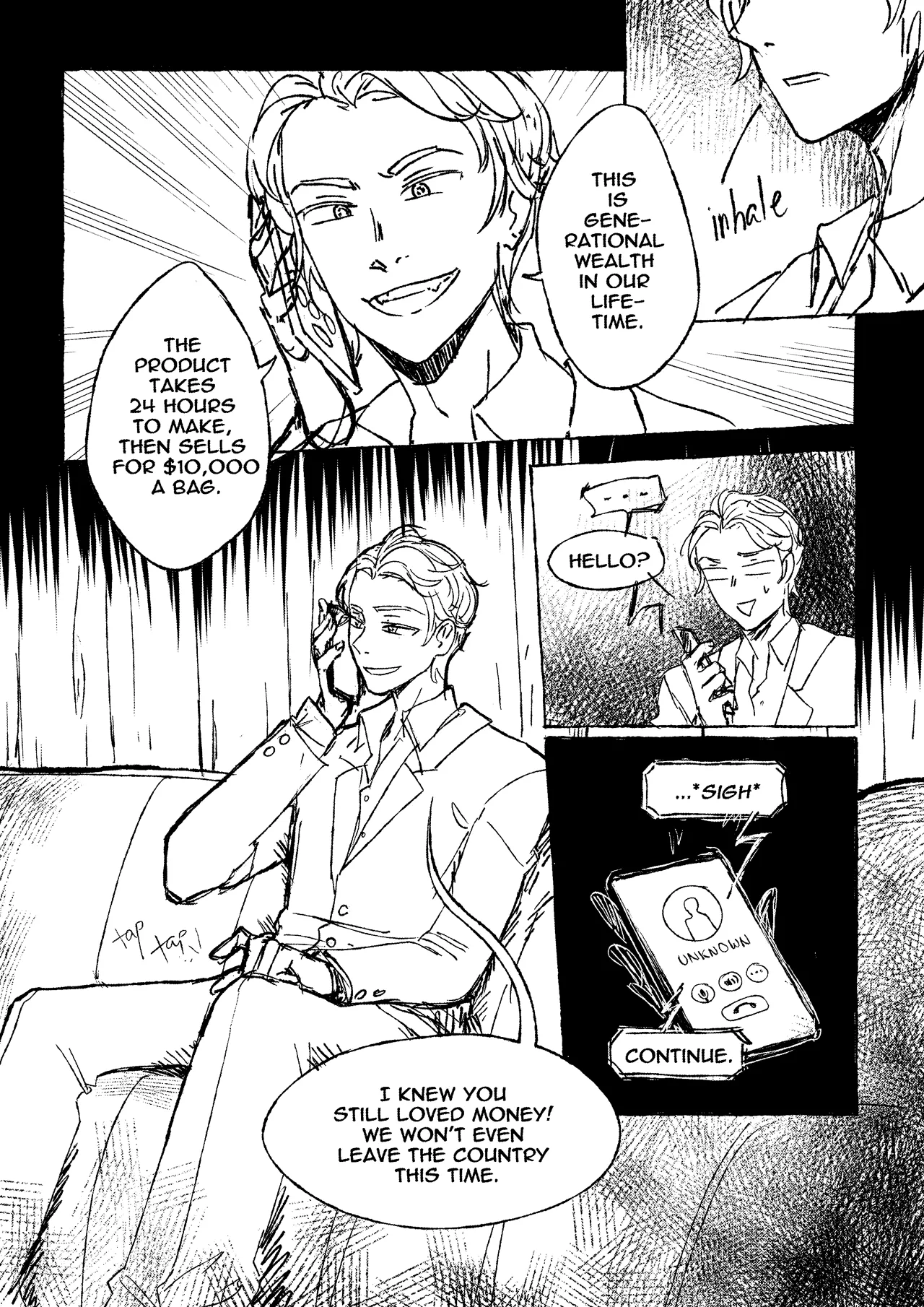
    No. This is generational wealth in our lifetime.

    BARNICUS
    The product takes 24 hours to make, then sells for $10,000 a bag.

Panel 3
The line is cold. Barnicus stares at the phone with both hands.

    BARNICUS
    Hello?

Panel 4
The phone slumps over in a sigh.

    HUSKY (O.S.)
    Continue...

Panel 5
Barnicus sets his foot on the ground, back upright, face resolute.

    BARNICUS
    We pay some mope to hire another mope in Africa. Have him and his Zulu buddies collect coffee beans.
A character without a problem is a mannequin.
Barnicus's problem walks in through the phone: Husky, off-panel, tells him they're wealthy legally now and to stop with the scams — which means Barnicus is the one who won't stop, which is the whole problem, and none of it needed narration to land.
The reader sees the tension in Panel 5 when Barnicus stares at the phone "as if it's chewed his hairline," and the story has told us who he is by showing us what he can't let go of.
The trick — whether you're writing a comic script or a manga script — is that the problem should be personal, not procedural. Barnicus isn't trying to save the world or defuse a bomb; he's trying to convince a friend that poop-coffee elephants are the future, and the stakes are entirely social: don't disappoint the person on the other end of the line.
That's what makes the scene sting; the reader recognises the shape of somebody trying to sell a bad idea to someone who loves them, and suddenly Barnicus is a character instead of a caricature.
# Page 3

Panel 1

    BARNICUS
    'Cos coffee grows like grass over there. He feeds the beans to an elephant till Dumbo takes a massive golden dump.

    BARNICUS
    He cleans it up, sells the poop-coffee to us for 50 cents a kilo, and we re-sell it to millionaires in Thailand.

Panel 2

    HUSKY (O.S.)
    Where are you right now?

Panel 3
Barnicus freezes mid motion, the tooth pick hanging by the bottom lip.

Panel 4
PULL BACK to reveal — Barnicus is in a VIP booth. Outside, a pole on stage. A STRIPPER mid-pirouette blows him a kiss in slow motion. The "men with heads low" are trucking notes from their pockets to women on stage. Soju bottles everywhere.

Panel 5
Barnicus waves a fistful of money. The grin returns, full force.

    BARNICUS
    I'm at a single-mother fundraiser.
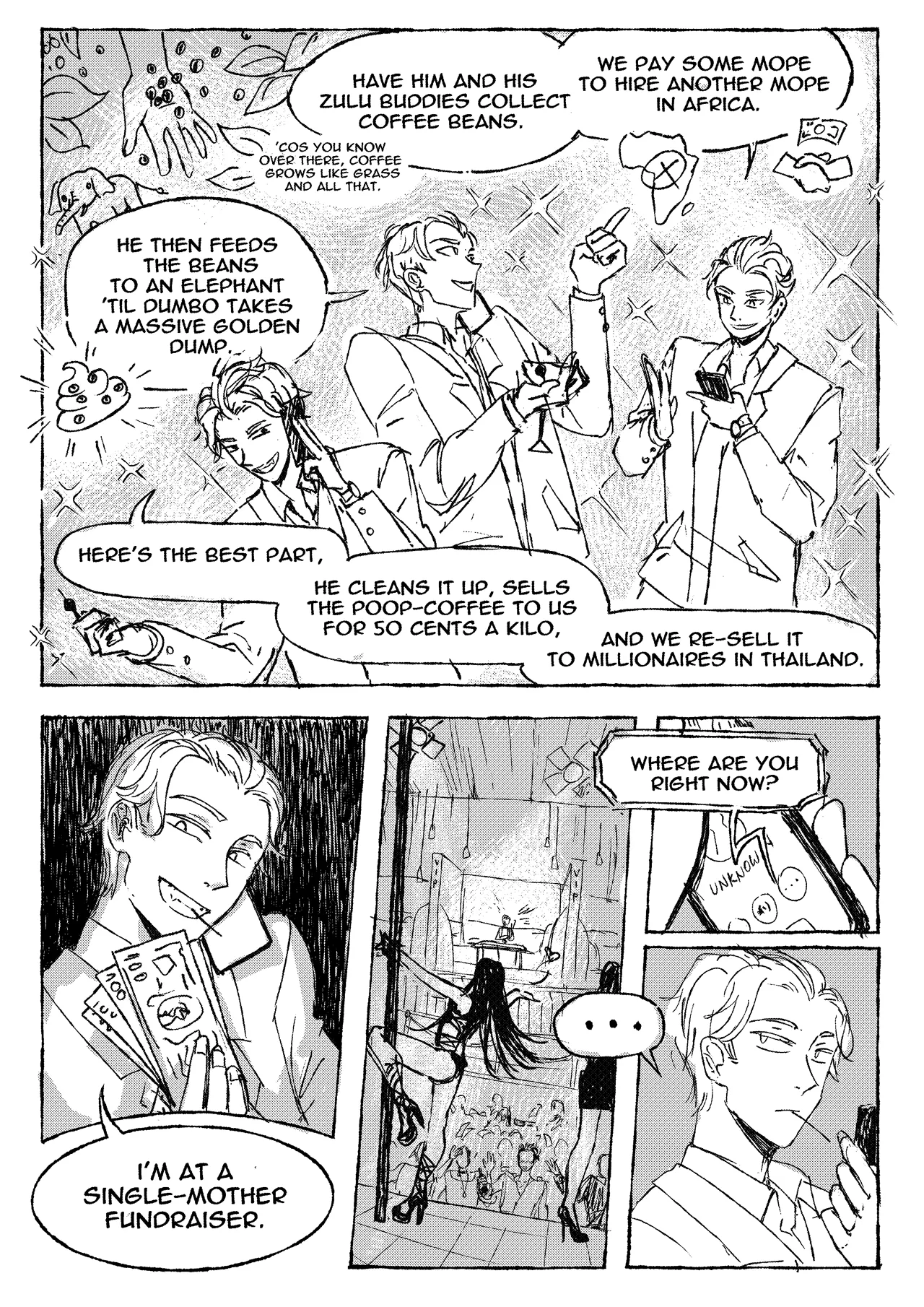
Where you introduce a character is as important as how. Barnicus's opening lands in a "private booth" of "dark purple lights" and glitter out of focus — the reader assumes a nightclub, maybe a shady deal, and lets Barnicus talk without questioning the setup.
Then on page 3, Panel 4 pulls back and the setting flips: he's in a strip-club VIP booth waving cash at a stripper mid-pirouette, and the same monologue re-reads as something much funnier and much more damning.
Barnicus's final line — "I'm at a single-mother fundraiser" — is the caption on the whole introduction, because it proves he'd rather protect the lie than the friendship. Pick the setting that makes the character explain themselves twice, and the introduction does the work of three pages of exposition.
The script was written by Pistol Taeja without any robots. The art was done by Void Soup, and you can find more of his work at his portfolio.
The rules stay the same whether you're writing a comic, a manga or a graphic novel: give your character something to do, one line only they would say, a personal problem they can't let go of, and a setting that pays off twice.

A beginner-friendly walkthrough of writing a manga in plain text, using the script Barnicus made in real time by Pistol Taeja.
A beginner-friendly walkthrough of writing a manga in Google Docs — pages, panels, action, dialogue. No drawing software, no expensive tools, just plain text.
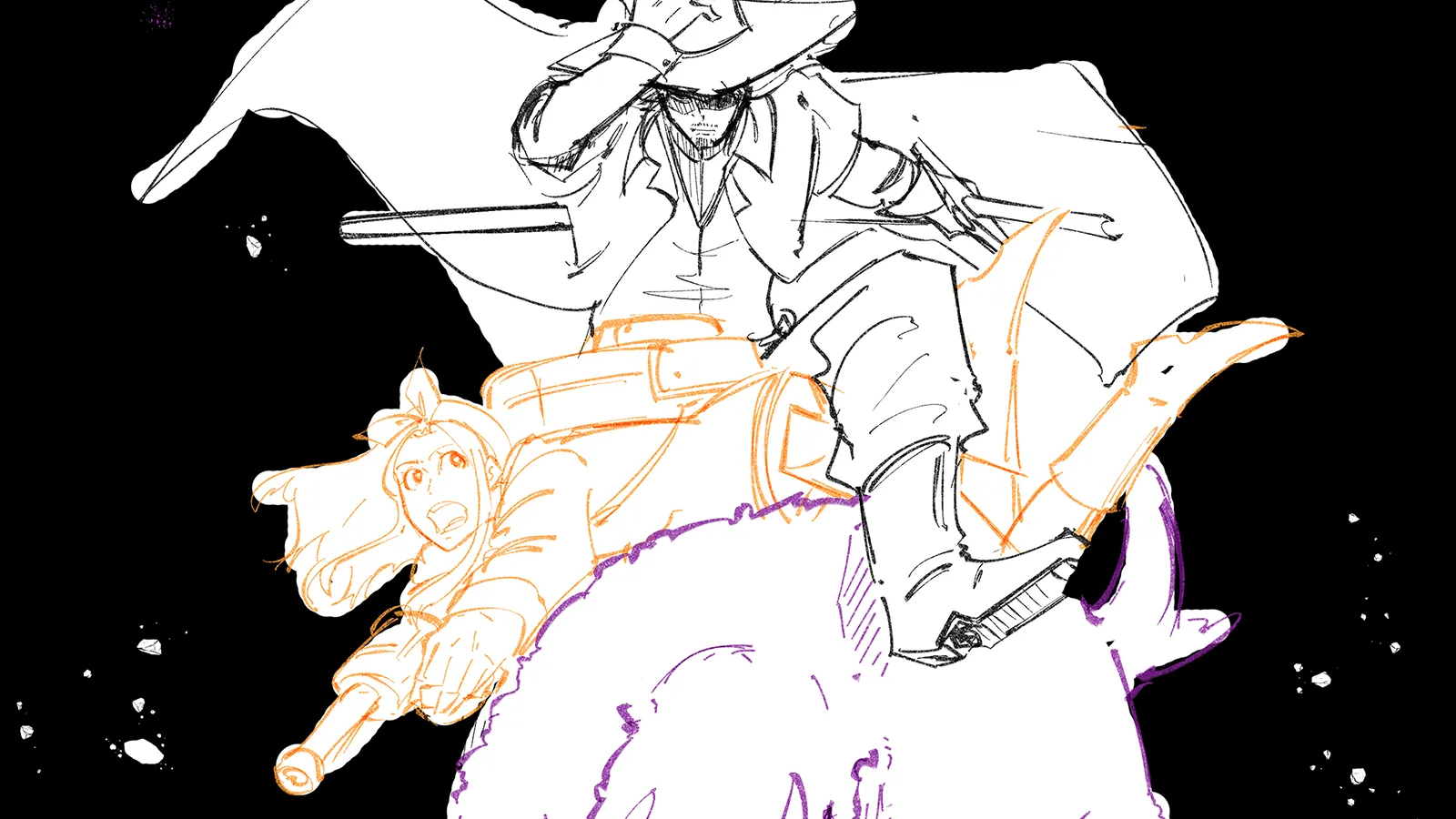
Wonder no more, a real comic script is used side-by-side the production art to show how to write a comic script or graphic novel.